Teams work better when they can see what's actually going on

You already know something needs to change. The harder question is what, and how, and where to start. I help teams get underneath what's not working — and create the conditions for change that sticks.

I've sat in your seat — Director of Talent, Head of Leadership Development, across five countries and 30,000-person organisations. I know what it looks like from the inside.

The problems that keep coming back

Different sectors, different countries, different cultures. Whether the challenge is team development, culture change, or navigating AI transformation — the patterns are remarkably consistent.

The leadership team that isn't one

Meetings happen, decisions don't. Everyone's capable individually — but something's broken in the room and nobody's naming it.

A workforce that's unsettled and holding back

Something shifted — a restructure, a change in priorities. People are still showing up, but the energy is different.

Departments that perform alone but not together

The friction at the joins is getting worse. It feels like personality clashes — it's almost never that.

L&D investment that needs to prove its worth

The question isn't just whether the programme was good — it's whether it changed anything back on the job.

A strategy that looks good on paper but isn't moving

Everyone agrees in the room, nothing changes afterwards. The real conversation is in the corridor, not the boardroom.

A culture that needs to shift — but won't

Nobody disagrees that change is needed. But where to, and how, and who goes first? The last initiative didn't stick.

What the work looks like

Most engagements are bespoke — built around what the team actually needs. The tools below are entry points and accelerants, not the product itself. The product is a team that works better, long after I've left the room.

Immersive Simulation

The Organisation Workshop

Your team sees how their organisation actually works — often for the first time.

A full-day simulation in which participants experience how power, responsibility and information flow through an organisation in real time. People are assigned to Tops, Middles and Bottoms, and the dynamics that emerge — the isolation, the overwhelm, the frustration, the misreading — are the same dynamics they live every day at work. Except here they can see them happening.

Surfaces the systemic roots of dysfunction without blame or judgement
Works across hierarchies — from C-suite to front line
Particularly powerful for organisations in change, merger, or rapid growth
Debrief structured to connect the simulation directly to real organisational issues
★ Only certified OW practitioner in the Middle East
Tabletop Simulation

Friday Night at the ER

How well does your team actually collaborate when the pressure is on?

A tabletop simulation set in a hospital emergency department under pressure. Teams face decisions that mirror the collaboration failures, data interpretation challenges, and innovation blockers they experience in their own organisations — compressed into a half-day experience that reveals how they actually work together, rather than how they think they do.

Surfaces collaboration patterns in a low-stakes, high-engagement environment
Works well for executive teams and cross-functional groups
Particularly effective for teams stuck in siloed working
Data-driven debrief connects simulation behaviour to real team patterns
Team Diagnostic

Team Diagnostic Survey (TDS)

Replace assumption with evidence — then do something about it.

A research-backed diagnostic built on the Six Conditions framework developed by Hackman and Wageman at Harvard — the conditions that account for up to 80% of team effectiveness. Every team member completes the survey, producing a 25–30 page report that gives the team a shared, honest picture of how it's actually functioning.

Research-backed — Hackman & Wageman's Six Conditions framework
Every team member's view — not just the leader's
25–30 page report: strengths, risks, and clear priorities
Natural starting point for sustained facilitation and team coaching
Virtual debrief available — works for global teams
Bespoke Facilitation & Coaching

The work that changes things

This is where most of the value lives — and where most practitioners stop short.

Diagnostics surface what's going on. Simulations make it visceral. But the sustained change happens in the facilitated work that follows — sessions designed specifically around what this team needs, at this moment, given what the evidence shows.

Designed around evidence — from the TDS, the OW, or a discovery conversation
Emergent and adaptive — responsive to what's actually in the room
Tackles the avoided conversations, the structural tensions, the patterns that repeat
Ends with something the team can keep doing without me in the room
How I work

Diagnose. Shift. Sustain.

Most engagements begin with a conversation about what's not working. From there, the right entry point becomes obvious — whether that's a diagnostic, a simulation, or something more bespoke.

Not what the brief says. Not what the leader suspects. What the evidence shows.

I use validated diagnostics and structured discovery to surface the real constraints before anything else — because the wrong intervention on the right problem is still the wrong intervention. Most engagements start here, even if the brief says "we just need a team day."
Team Diagnostic Survey (TDS)
Discovery conversation
Team Reality Check
Insight without experience rarely changes behaviour.

The interventions I use — simulations, immersive facilitation, structured conversations — create the kind of live, visceral experience that makes new thinking unavoidable. People can't un-see what they see in the room. That's the point.
Organisation Workshop
Friday Night at the ER
Bespoke team facilitation
The measure of any intervention is what happens six months later, not six hours later.

Real change needs the conditions that sustain it — the structures, processes and signals that make the right behaviours more likely to emerge and stick.
Team coaching
Habit design
Six Conditions for team effectiveness
What people say after the work
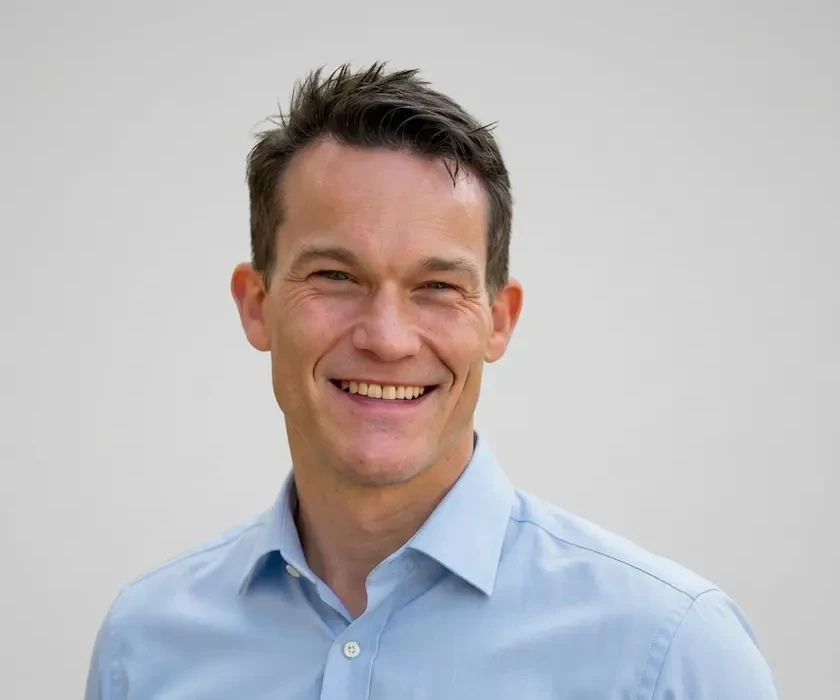
Dustin Woods
Dustin Woods

25 years inside organisations — as a Talent Director and Head of Leadership Development across the Middle East, Asia and Africa. Working on team effectiveness, leadership development and culture change. I've sat in the rooms where these conversations happen.

More about me →